
Jetty rope wrapping
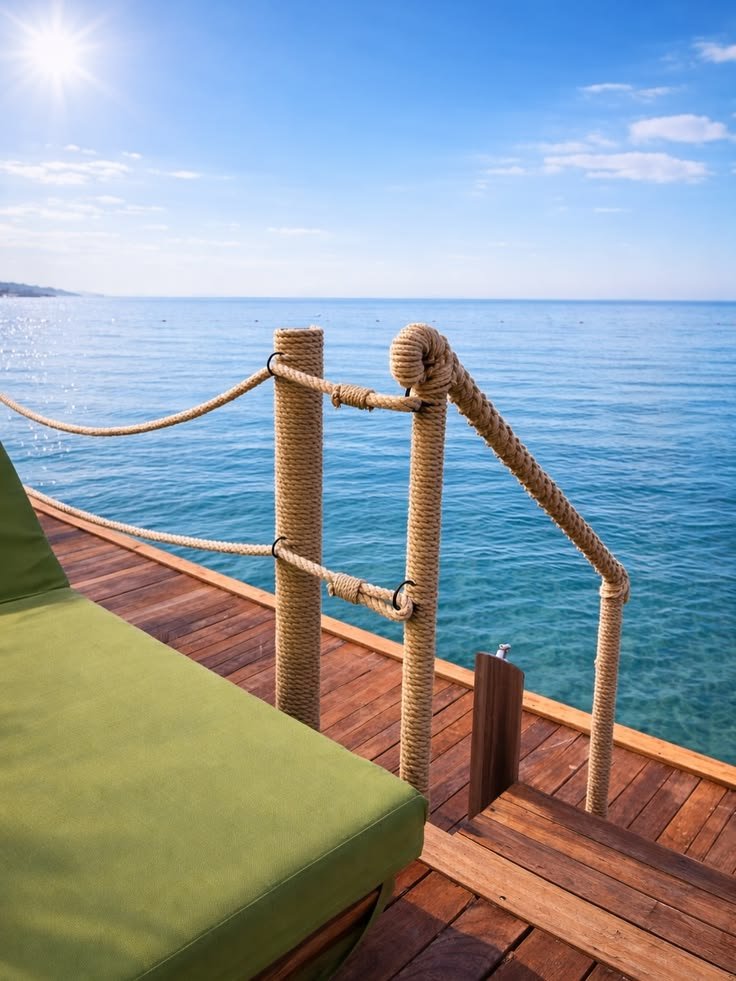
Hand-wrapped posts, flowing rope lines and carefully finished junctions. Decorative rope details made for the architecture of your coastal space.
Discuss a jetty project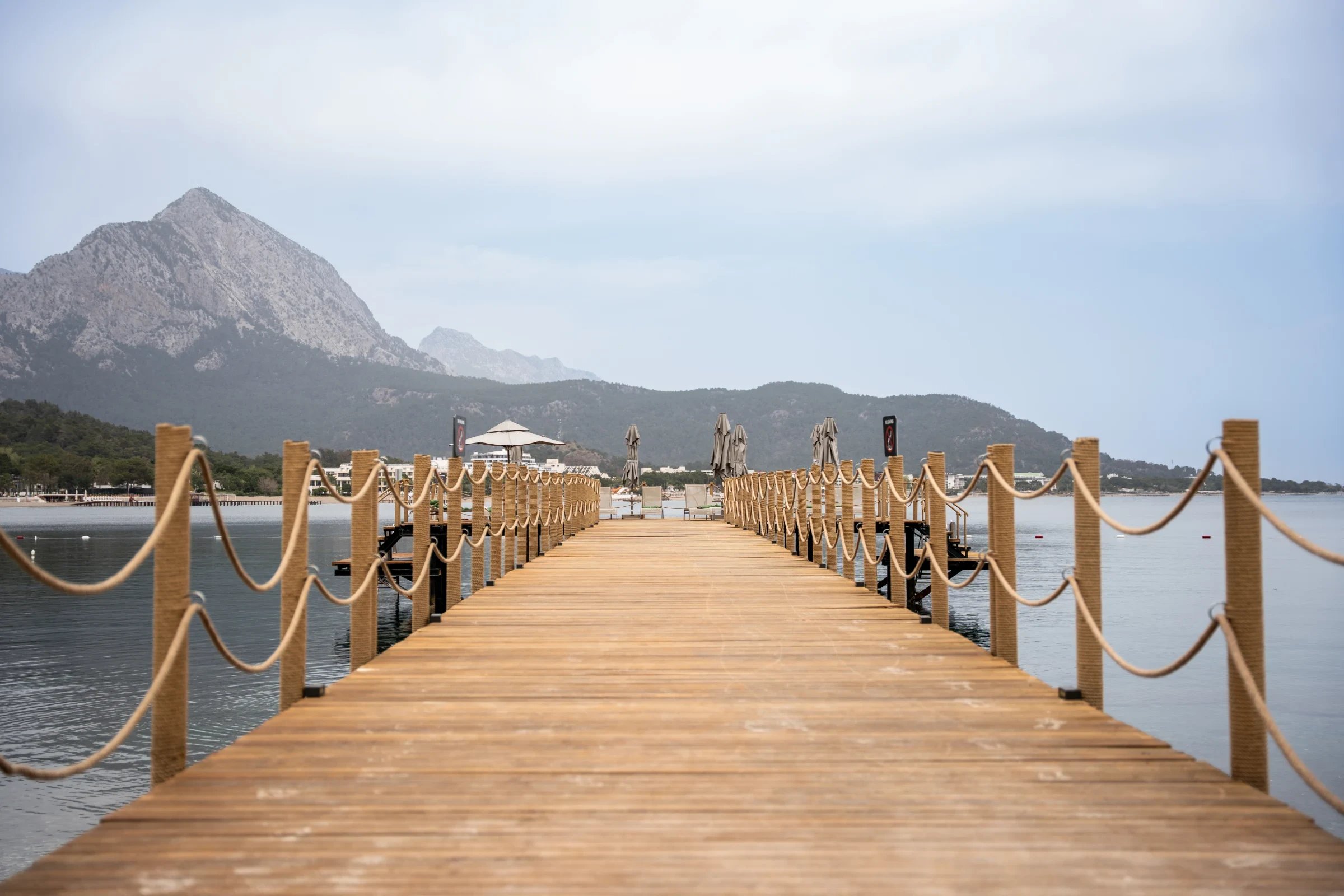
Details
Project notes
Scope, samples and care — the details to explore when planning your project.
The decorative layer, carefully resolved.
Our starting point is the visible rope finish: wrapped posts, coordinated rope lines, junctions and end details. Geometry, texture and colour are developed together so the installation reads as part of the place.
Decorative wrapping is distinct from a safety barrier. Load-bearing posts, anchorage, guardrail geometry and compliance require separate assessment and approval by the project’s qualified designer or engineer. A wrapped surface does not repair or certify the underlying structure.
Surface & preparation
Record the underlying material, coating, sharp edges, corrosion or decay. Agree any repairs and coating work before wrapping; keep drainage, inspection access and necessary fittings accessible.
Rope & rhythm
Choose fibre, actual diameter, construction and colour as a single sample. Compare a tighter wrapped surface with the visual rhythm of the adjacent rope lines; approve the result on a representative post.
Junctions & endings
Resolve starting and finishing points, corners, rings, joins and transitions before installation. Specify a neat, inspectable finish appropriate to the rope and substrate; agree the fixing method in the project detail.
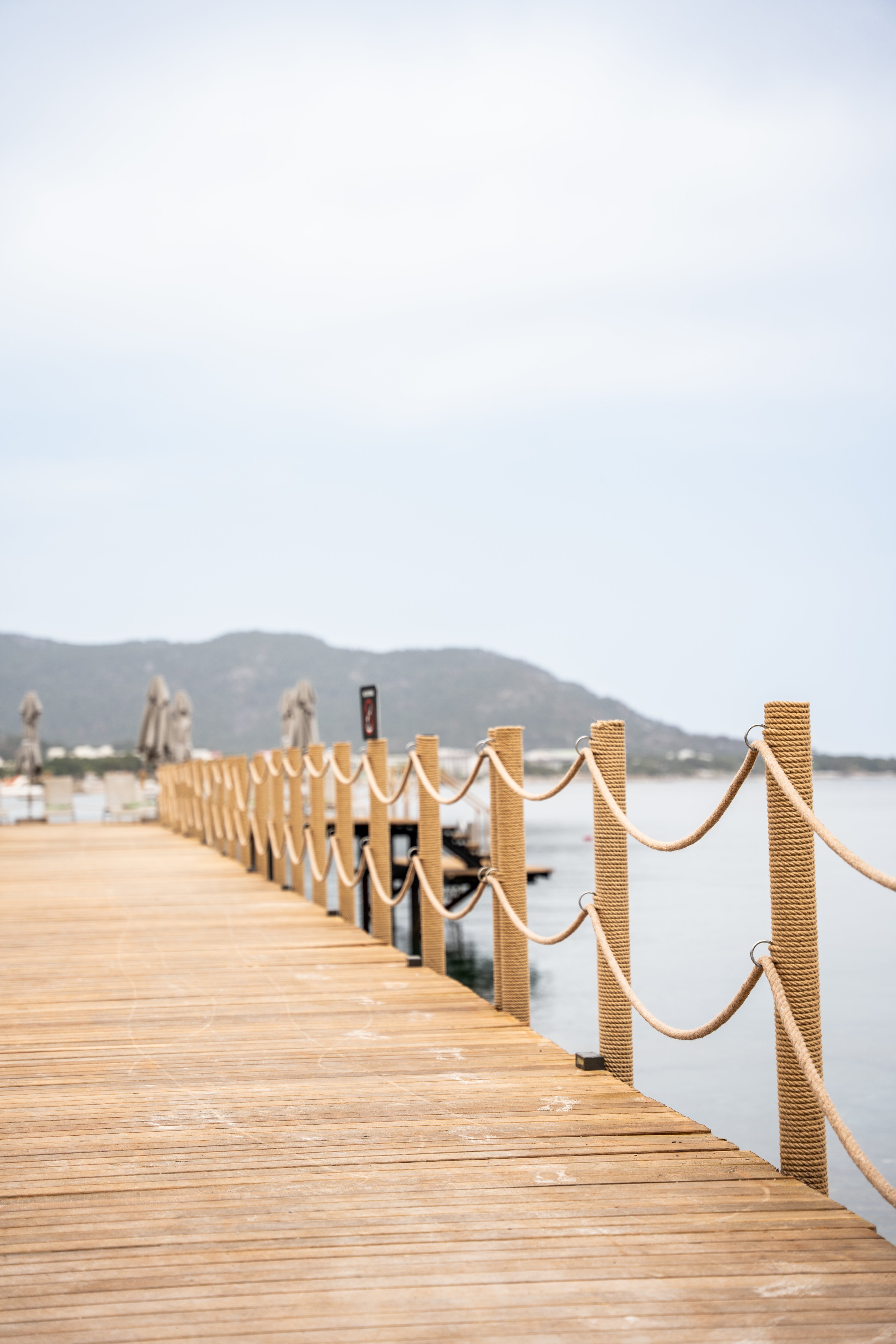
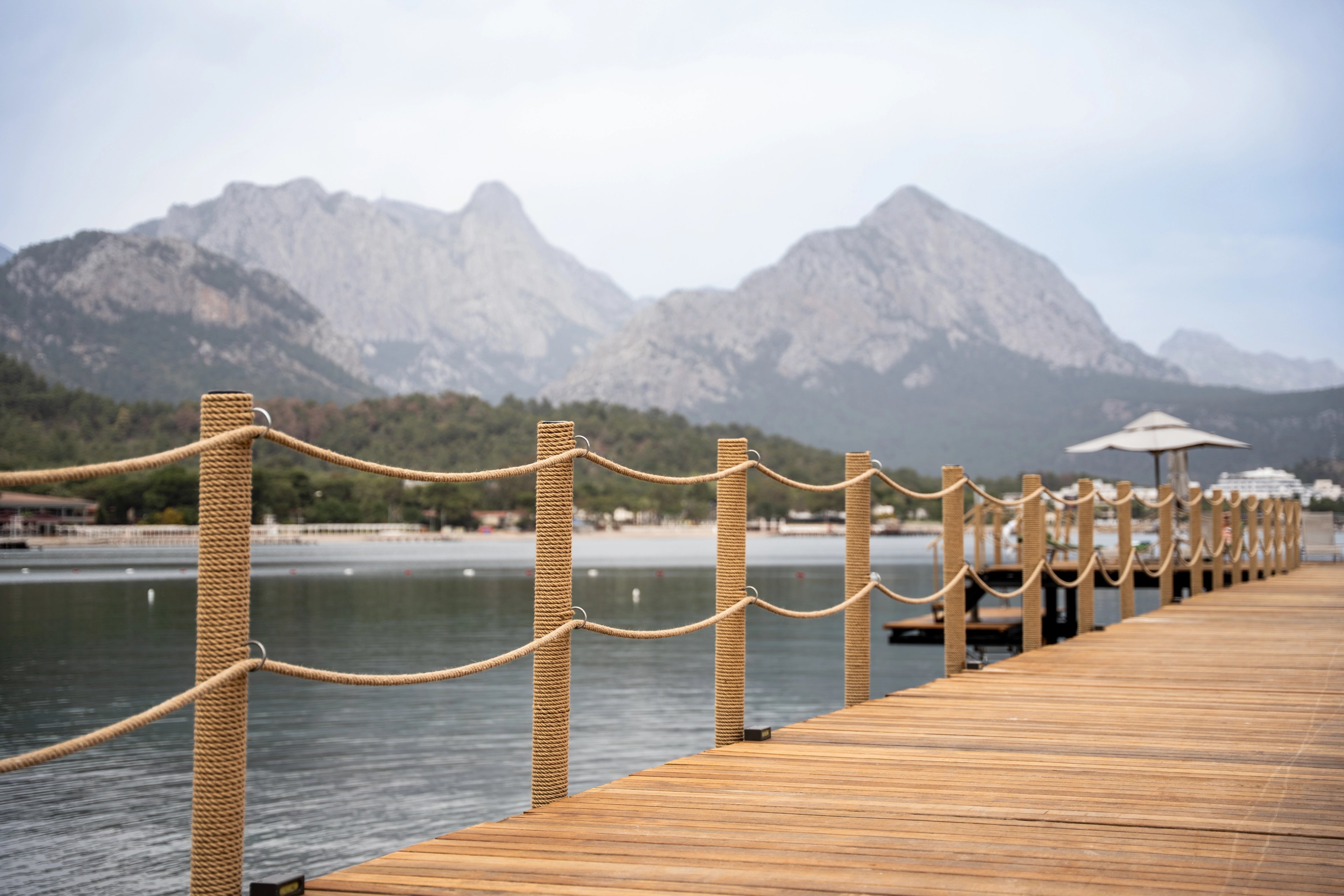
NG Phaselis Bay. Two project references.
The 2025 and 2026 project pages document Dimare rope work at NG Phaselis Bay. The photographs show the full jetty rhythm and a close view of the wrapped posts and rope junctions. They are visual references, not a performance test or a standard specification.
From site photograph to approved detail.
01 / Read the site
Review photographs, dimensions, access and the condition of existing posts. Identify where decorative work ends and structural or specialist work begins.
02 / Approve a sample
Compare the chosen rope and colour on a representative section, including the top, base and at least one junction. Confirm the touch, finish and maintenance approach.
03 / Plan the installation
Agree the scope, quantities, fixing details, preparation responsibilities and working window. Protect the deck and adjacent finishes and coordinate guest access with the venue.
04 / Inspect & hand over
Check the work against the approved sample. Record materials and finishes, photograph the completed details and agree inspection and cleaning responsibilities with the operator.
A useful first brief.
These inputs let us develop a meaningful scope and sample proposal. Share what you have; missing measurements can be identified during the review.
- Location, intended use and target installation window
- Wide photographs, close views of posts, bases, corners and junctions
- Post count, cross-section or diameter, height to be wrapped and spacing
- Existing substrate, coating, condition and any planned repair work
- Sun, salt spray, rain or wetting, drying conditions and guest hand contact
- Desired colour direction, rope character and any venue-specific requirements
- Site access, working hours, storage and responsibility for safety barriers
Care belongs in the specification.
Set the cleaning method with the selected rope supplier and approve it on an inconspicuous sample. Avoid unapproved chemicals or pressure washing. Agree inspection intervals around the site’s use and exposure; look for loose endings, movement, abrasion, persistent dampness and concealed substrate problems. Have damaged areas assessed before continued use where safety could be affected.
What we check at handover
- The agreed rope, colour lot and approved sample are recorded.
- Wrap spacing, visible joins and end details match the sample.
- No loose tails, exposed sharp fixings or damage to adjacent finishes.
- Drainage, inspection points and necessary fittings remain accessible.
- Decorative acceptance and any required structural approval are recorded separately.
Before specifying a coastal rope detail
Which rope should we choose for a seaside jetty?
Start with the exposure and the detail, then compare samples and product-specific supplier data. Polyester is one route to evaluate; cotton, jute or another fibre name alone does not establish suitability, lifespan or UV performance.
Can you wrap existing posts?
The existing geometry, surface and condition need to be reviewed first. Any repairs, corrosion treatment or structural issues must be resolved within the agreed project scope before the decorative wrap is installed.
Does rope wrapping make a compliant safety barrier?
No. The decorative rope scope does not establish structural capacity or guardrail compliance. Any safety function requires separate design, verification and approval for the actual location.
What determines cost and timing?
Post dimensions and quantity, rope and construction, preparation, joins, access and the installation window. We prepare the proposal after reviewing the site brief and sample requirements; there is no universal price or lead time.
Project enquiries
Send a wide view, a close detail and the measurements you have. We will use them to develop a material direction and a project-specific scope.